Moncton Real Estate Blog – Your Go-To Source for Market Insights & Home Advice

Welcome to the Moncton Real Estate Blog, your trusted resource for the latest market trends, expert home-buying advice, and insider tips on buying, selling, and investing in Moncton, Riverview, and Dieppe. Whether you’re a first-time homebuyer, a seasoned investor, or looking to sell your property, we’ve got the insights you need to navigate the ever-changing real estate landscape.

🏡 What You’ll Find on Our Blog

🔹 Market Updates & Trends – Stay informed with monthly reports on home prices, sales data, and inventory shifts in Southeast New Brunswick.
🔹 Home Buying & Selling Tips – Get expert advice on how to find the right property, negotiate the best deal, and prepare your home for sale.
🔹 Investment & Rental Property Insights – Learn how to maximize your ROI and identify high-potential properties in Moncton’s growing market.
🔹 Neighbourhood Spotlights – Discover the best communities to live in, from family-friendly areas to up-and-coming investment hotspots.

📢 Featured Blog Posts

Check out some of our most popular articles:
✅ March 2025 Moncton Real Estate Market Update
✅ 5 Signs it Might be Time to Sell Your Home
✅How to Get The Best Price When Selling Your Home 

📍 Why Follow Our Blog?

The Moncton real estate market is always evolving, and staying ahead of trends can help you make better decisions. Our blog is designed to keep you informed, empowered, and confident in your real estate journey.

📩 Subscribe to our newsletter to get the latest updates delivered straight to your inbox!

💡 Looking to buy or sell a home in Moncton? Browse the latest listings at homesforsalemoncton.ca!

Nov. 5, 2026

Greater Moncton Real Estate Market Update | October 2026

Greater Moncton Real Estate Market Update – October 2026

Sales Are Slowing, Inventory Is Growing, and Investment Opportunities Are Emerging

What happens when a real estate market that has been moving at full speed finally starts to slow down?

For buyers, it can mean more choices, less pressure, and greater negotiating power. For sellers, it means that pricing and presentation matter more than ever. And for real estate investors, it could signal the beginning of an exciting new chapter.

The latest numbers for South-East New Brunswick confirm that the market is shifting. Sales have declined for several consecutive months, while new listings continue to outpace last year's figures.

I've been spending considerable time analyzing investment properties throughout Greater Moncton, and I'm increasingly seeing opportunities worth exploring. In this month's update, we'll look at what's happening in the market, what it means for buyers and sellers, and a couple of interesting opportunities I've come across recently.

October Sales Down 27% Compared to Last Year

October 2026 saw a significant decline in real estate activity across South-East New Brunswick.

Here are the key numbers:

  • 278 properties sold in October, down 27% compared to October 2025.

  • 3,026 properties sold year-to-date, representing an 11% decline compared to the same period last year.

  • Total October sales volume declined by 28% year over year.

  • 85 days on market on average, highlighting the importance of realistic pricing and effective marketing.

This continues a trend that has been building throughout the summer and fall.

Month Year-over-year sales decline
August 2026 13%
September 2026 22%
October 2026 27%

The decline in sales is becoming more pronounced. However, fewer transactions do not necessarily mean that property values are falling at the same rate.

The average sale price in October reached $399,758, an increase of $18,362 compared to September.

This is an important distinction: transaction volume and average sale prices do not always move together. The average can fluctuate depending on the types of properties sold during a particular month.

More Listings, More Competition for Sellers

While sales activity has slowed, new properties continue to enter the market.

In October:

  • 635 new properties were listed, up 4% compared to October 2025.

  • 6,401 properties have been listed year-to-date, also up 4% compared to last year.

  • The year-to-date list-to-sale ratio declined to 57%, down 21 percentage points from last year.

In other words, more properties are coming onto the market, but a smaller proportion are successfully finding buyers.

This creates a different environment than the exceptionally competitive market many sellers experienced over the past few years.

Buyers have more options and can take more time to compare properties. Sellers must compete more directly on price, condition, presentation, and accessibility for showings.

A property can still sell successfully in today's market, but relying on yesterday's pricing strategy may lead to longer days on market and eventual price reductions.

What Does This Mean for Buyers?

For buyers who have been waiting for the right opportunity, the changing market may be encouraging.

With fewer competing buyers and more properties available, buyers may have greater flexibility to:

  • Compare more properties before making a decision.

  • Negotiate on price and conditions.

  • Take the time to complete inspections and due diligence.

  • Explore properties that may have been overlooked in a faster market.

That said, not every property is suddenly a bargain. Well-priced homes in desirable locations can still attract significant interest.

The key is understanding the specific market segment you're buying into and recognizing when a property represents genuine value.

What Does This Mean for Sellers?

For sellers, the market is becoming more demanding.

Pricing a property correctly from the beginning is increasingly important. Buyers have more choices, and overpriced properties may struggle to generate interest.

Successful sellers should focus on:

  • Realistic pricing: Base your asking price on recent comparable sales and current competition.

  • Presentation: Make the property as appealing as possible through cleaning, decluttering, and appropriate preparation.

  • Marketing: Ensure the property receives professional photography and meaningful exposure.

  • Accessibility: Make showings convenient for prospective buyers.

The market hasn't stopped moving. It has simply become more competitive, and sellers need a strategy that reflects current conditions.

Greater Moncton Investment Properties: Opportunities Are on the Rise

One of the most interesting aspects of the current market is what it could mean for real estate investors.

I've been actively working through the numbers on investment properties throughout Greater Moncton, and I'm seeing more opportunities worth investigating.

As inventory grows and competition among buyers eases, investors may have greater flexibility to negotiate and identify properties with attractive rental potential.

Of course, every investment needs to stand on its own numbers. Purchase price, financing, renovation costs, rental income, vacancy, and ongoing expenses all matter.

But with the market shifting, this is an excellent time to start looking more closely at what Greater Moncton has to offer.

Featured Listing: 277–279 Cedar Street, Moncton
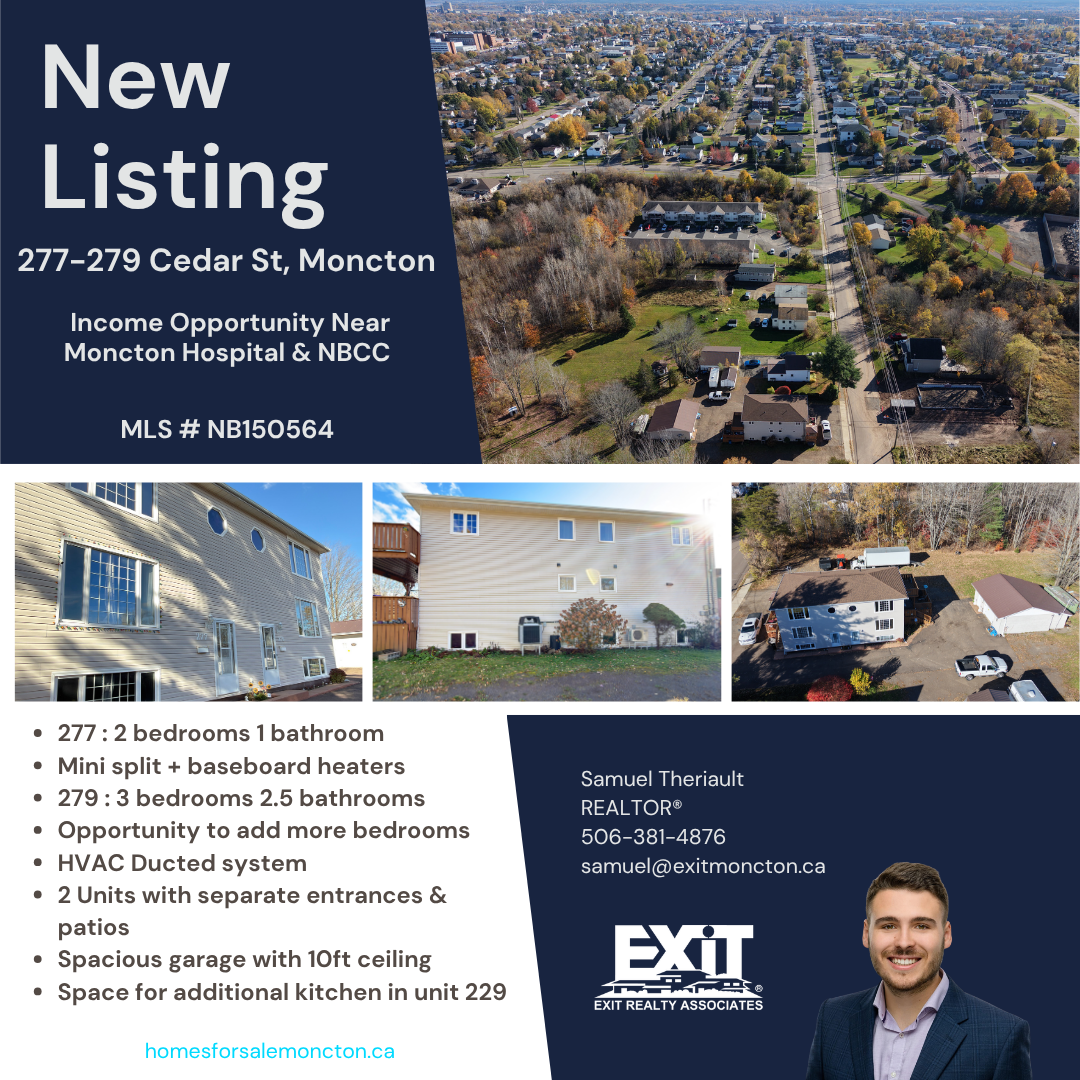
My new listing at 277–279 Cedar Street presents an interesting opportunity for investors looking to generate rental income.

Located within walking distance of the Moncton Hospital, the property features two separate living spaces and offers potential for a variety of rental strategies.

One possibility worth exploring is converting the property into room rentals, subject to zoning, building code, and any required approvals.

There may also be an opportunity to expand the investment beyond the property itself.

The vacant land next door could potentially be purchased, along with the neighbouring house on the other side, which is not currently listed for sale.

For the right investor, this could be an opportunity to explore a larger project with multiple properties rather than simply purchasing a single investment.

If you're interested in learning more about 277–279 Cedar Street or discussing the potential of the surrounding properties, contact me directly. I'd be happy to discuss the opportunity and help you evaluate the numbers.

A Hidden Opportunity in Moncton's Restaurant / Bar Scene

What if your next investment wasn't a house?

I've recently come across an intriguing off-market bar and restaurant opportunity in Greater Moncton that I couldn't resist sharing a little glimpse of.

Whether you're an entrepreneur dreaming of owning your own establishment, an experienced operator looking for your next venture, or an investor exploring opportunities beyond residential real estate, this one might be worth a closer look.
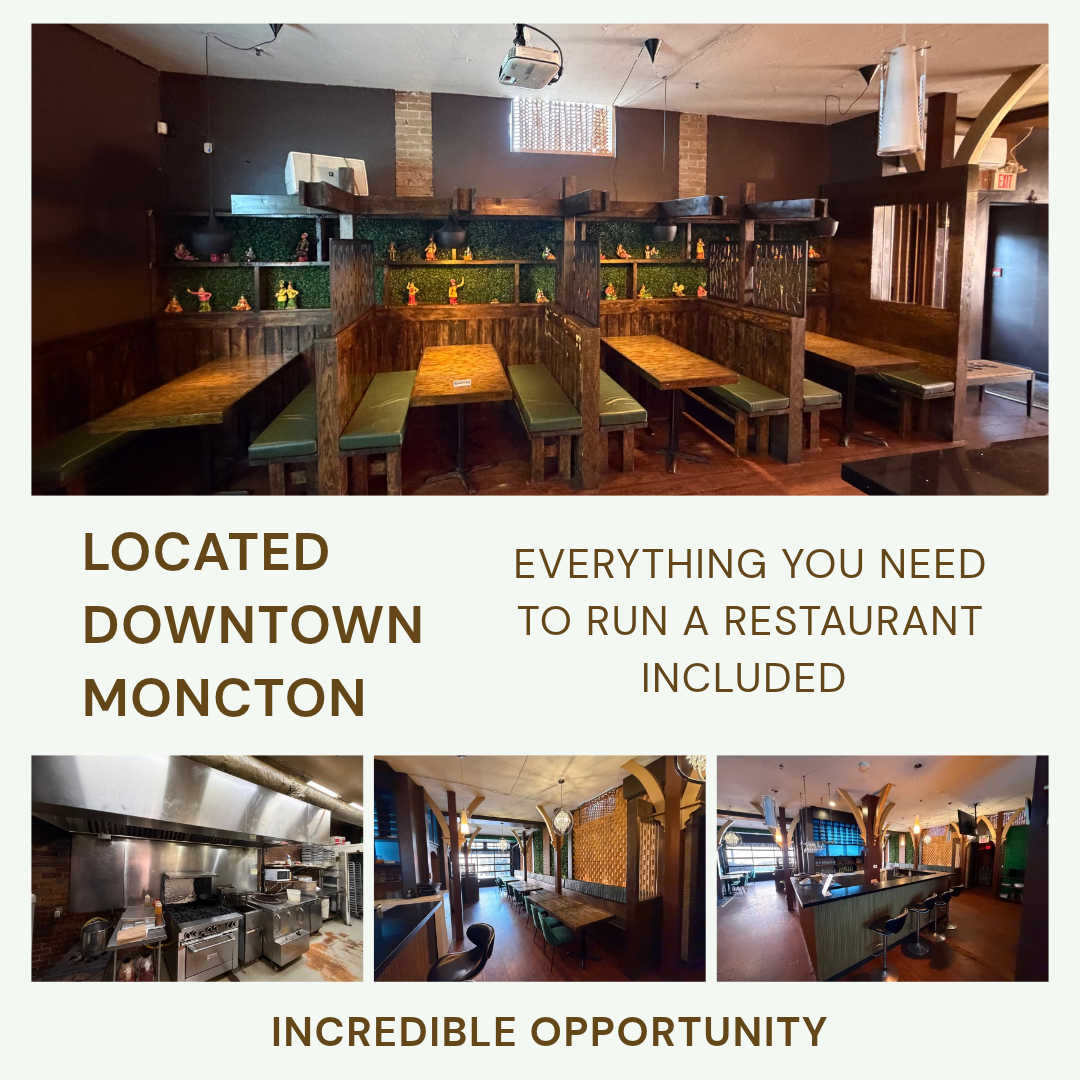
I'm keeping the details under wraps for now, but there is much more to this opportunity than meets the eye.

Curious? Contact me directly for more information and to find out whether this could be the right opportunity for you.

A Market in Transition — Not a Market in Decline

The latest numbers tell us that South-East New Brunswick's real estate market is changing.

Sales are slowing. Inventory is growing. Buyers are gaining negotiating power, and sellers need to be more strategic.

But a changing market also creates opportunities.

Whether you're looking to purchase your first home, sell your current property, or expand your investment portfolio, understanding what's happening locally is more important than ever.

Real estate conditions can vary significantly by neighbourhood, property type, and price range. Regional averages are useful, but the most important numbers are the ones that apply to your specific situation.

If you're considering buying, selling, or investing in Greater Moncton or anywhere in South-East New Brunswick, I'd be happy to help you understand the market and explore your options.

Samuel Theriault, REALTOR®
EXIT Realty Associates
Phone: 506-381-4876
Email: samuel@exitmoncton.ca
Website: homesforsalemoncton.ca

Thinking about buying, selling, or investing? Let's talk about what's possible in today's market.

Posted in Market Updates
Oct. 9, 2026

Your Complete Guide to Buying Land in Moncton & New Brunswick (2026-2027))

Your Complete Guide to Buying Land in Moncton & New Brunswick

Buying land in Moncton, Dieppe, Riverview, or anywhere in New Brunswick is one of the smartest investment moves you can make in 2026. Whether you're planning to build your dream home, develop an investment property, or hold land for long-term appreciation, this guide covers everything you need to know about navigating the land market in Greater Moncton and beyond.​

Understanding the Moncton Land Market in 2026

The Greater Moncton real estate market is transitioning to balanced conditions with healthy migration-driven demand supporting sustainable growth. Land prices across Moncton, Dieppe, and Riverview currently range from approximately $85,000 for rural lots to over $2 million for prime commercial or development parcels. The market is seeing particularly strong interest in serviced lots ready for immediate construction, while raw land in emerging areas like Cocagne and Shediac presents compelling opportunities for patient investors.​

Moncton North and Dieppe continue to lead development activity, with developers focusing on density, sustainability, and affordability. The Vision Lands project between the Trans-Canada Highway and Wheeler Boulevard represents a major 566-hectare development that signals long-term growth potential for the region. With the city's 2026 budget allocating funds for infrastructure and park development, land values in strategic corridors are positioned for appreciation.cbc+1​

Types of Land Available in New Brunswick

Serviced Residential Lots

Serviced lots come with municipal water, sewer, power, and road access already in place. These lots command premium prices but allow you to start building immediately after permits are secured. In Moncton and Dieppe, serviced lots typically range from $135,000 to $500,000 depending on location, size, and proximity to amenities.

Unserviced Rural Land

Rural properties require private wells and septic systems. In New Brunswick, lots with private well and septic systems must meet minimum dimensions of 54 metres wide, 38 metres deep, and 4,000 square metres in total area (approximately one acre). These properties offer more privacy and lower purchase prices, with rural lots in areas like Lakeville and Berry Mills starting around $85,000 to $150,000.crscplanning+1​

Waterfront and Coastal Properties

The Shediac, Cocagne, and Grande-Digue areas offer waterfront land opportunities ranging from $45,000 for inland lots to $299,000 for premium Main Street commercial parcels near the water. Coastal land presents unique investment potential but requires careful flood hazard assessment before purchase.

Commercial and Development Land

Large-parcel commercial land along major corridors like Mountain Road and Wheeler Boulevard ranges from $1.45 million to $7 million depending on size, zoning, and development potential. These properties target investors and developers looking to capitalize on Moncton's steady population growth and business expansion.​

The True Cost of Buying Land

Purchase Price and Down Payment

Banks typically require substantial down payments for vacant land purchases, often 50% to 80% of the purchase price when buying land without immediate construction plans. If you're purchasing land as part of a construction package, financial institutions are more willing to finance with lower down payments of 20% to 30%.wowa+1​

New Brunswick Land Transfer Tax

New Brunswick charges a Real Property Transfer Tax of 1% on the purchase price or assessed value, whichever is higher. For a $200,000 land purchase, you'll pay $2,000 in transfer tax. This fee applies to all property purchases in the province with no exemptions for first-time buyers or private sales. The buyer is responsible for this tax, which is paid at registration through Service New Brunswick, typically handled by your lawyer.wowa+2​

Legal Fees and Title Insurance

Budget $1,500 to $2,500 for legal fees to handle the land purchase transaction, title search, and registration. Your lawyer will ensure the property has clear title, review zoning restrictions, and coordinate the closing process.​

Survey and Environmental Assessments

A current survey confirming property boundaries typically costs $1,000 to $3,000 depending on lot size and complexity. For rural properties, you may also want soil testing and percolation tests to confirm septic system viability, adding another $500 to $1,500 to your costs.gnb​

Financing Your Land Purchase

Land Loans and Construction Mortgages

Traditional mortgage lenders are hesitant to finance raw land purchases because land generates no income and carries higher risk. Your financing options include:wowa+1​

  • Construction mortgages: When purchasing land with immediate building plans, lenders offer construction loans covering 65% to 75% of the land cost plus construction expenseswowa​

  • Home equity line of credit: If you own property with available equity, a HELOC provides flexible financing for land purchaseswowa​

  • Private lenders: Private financing is available but typically requires 50% down payment and carries higher interest rateswowa​

  • Seller financing: Some sellers offer direct financing arrangements, allowing you to negotiate down payment and payment terms directlywowa​

Cash Purchases

Many land buyers in New Brunswick purchase with cash or secure personal lines of credit before searching for property. Cash purchases strengthen your negotiating position and eliminate financing conditions that could delay or complicate the transaction.​

Zoning and Development Regulations

Understanding Zoning Bylaws

Before purchasing any land, verify the zoning designation and permitted uses. Properties are zoned for residential, commercial, agricultural, or mixed use, and changing zoning is a lengthy process taking four to six months minimum. Contact municipal planning departments or regional planning commissions to confirm what you can build on the property.crscplanning​

Building Permits and Development Permits

All construction in New Brunswick requires building permits and development permits. Even projects like decks, sheds, fences, and finished basements require zoning permits in addition to building permits. Factor permit costs and timelines into your project planning, as some developments require environmental assessments, traffic studies, or variance applications.northbrunswicknj+1​

Septic and Well Requirements

Rural properties require approved septic systems and potable water wells. New Brunswick regulations mandate minimum separation distances between septic systems, wells, buildings, property lines, and water bodies. Septic tanks must have minimum 3,410-litre capacity and meet CSA standards. Hire licensed septic installers to confirm your lot can accommodate compliant systems before finalizing purchase.gnb​

Best Areas for Land Investment in Greater Moncton

Moncton North

Moncton North leads new construction activity with strong demand for single-detached homes and multi-unit developments. Land in this area benefits from proximity to amenities, employment centres, and major transportation routes. Expect premium pricing but strong long-term appreciation potential.​

Dieppe

Dieppe continues as a construction leader with developers focusing on energy-efficient builds and higher-density projects. Serviced lots command top dollar, but the municipality's growth trajectory justifies the investment for builders and homeowners seeking established neighbourhoods.​

Riverview

Riverview offers a balanced mix of serviced and rural land options with strong community amenities and excellent school access. Land prices are slightly lower than comparable Dieppe locations while maintaining proximity to Moncton's employment core.zillow+1​

Shediac and Cocagne

Coastal communities like Shediac and Cocagne present unique lifestyle and investment opportunities. Land prices start lower than urban areas, ranging from $45,000 to $170,000 for most lots, with waterfront parcels commanding premium pricing. These areas attract retirees, vacation property buyers, and those seeking rural living within reasonable commuting distance.​

Investment Perspective on Moncton Land

Greater Moncton's steady in-migration, low vacancy rates, and affordable housing compared to major Canadian cities create strong fundamentals for land investment. Population growth driven by interprovincial migration and immigration continues to fuel housing demand, which directly impacts land values.​

Investors are focusing on quality, sustainability, and long-term growth rather than short-term flipping. As rental demand remains strong and new-home construction stays active, holding land for development or future appreciation represents a lower-risk strategy compared to volatile urban markets. The balanced market conditions in 2026 provide predictable pricing with modest appreciation expected through the year.​

Due Diligence Checklist Before Buying Land

  • Verify zoning and permitted uses with municipal planning departments

  • Order a current survey showing accurate boundaries and easements

  • Check flood hazard maps especially for properties near water or low-lying areas​

  • Confirm utility access including costs to extend water, sewer, power, and internet

  • Test soil conditions and percolation rates for septic system approval

  • Review property tax assessments and annual tax obligations

  • Investigate access rights ensuring legal road access to the property

  • Research future development plans in surrounding areas that could impact value

  • Hire a real estate lawyer to conduct title searches and handle closing

  • Obtain title insurance to protect against unknown title defects

Working with a REALTOR® for Land Purchases

While you can purchase land directly from private sellers, working with an experienced REALTOR® provides significant advantages. A knowledgeable agent helps you navigate MLS listings, access off-market opportunities, interpret zoning regulations, coordinate with developers, and negotiate pricing based on comparable sales data.​

As a REALTOR® working throughout Moncton, Dieppe, Riverview, and surrounding areas, I help clients identify land opportunities that match their goals, connect them with builders and developers, and guide them through every step of the purchase process. Whether you're buying your first lot to build a home or adding investment land to your portfolio, local expertise makes the difference between a smooth transaction and costly mistakes.

Why 2026 is Strategic for Land Buyers

The current market conditions favor prepared buyers. With interest rates stabilizing, inventory levels improving, and balanced market dynamics, land buyers can move with greater confidence than during the volatile years of 2021-2023. Prices have stabilized while development fundamentals remain strong, creating an environment where patient investors can secure quality parcels without bidding wars or speculative pressure.​

Moncton's relative affordability compared to other Atlantic Canadian cities, combined with ongoing infrastructure investment and population growth, positions the region as one of the most stable real estate markets in Canada. Land purchased today in strategic growth corridors will benefit from continued urban expansion and development over the next decade.​

Frequently Asked Questions

Can I get a mortgage to buy land in New Brunswick?

Banks typically don't offer traditional mortgages for vacant land purchases. You'll need substantial down payment (50-80%) or purchase land as part of a construction mortgage package. Alternative financing includes home equity lines of credit, personal lines of credit, or seller financing arrangements.

What is the minimum lot size for building a home in New Brunswick?

For lots with private well and septic systems, New Brunswick requires minimum dimensions of 54 metres wide, 38 metres deep, and 4,000 square metres total area (approximately one acre). Serviced lots with municipal water and sewer have different requirements set by local zoning bylaws.crscplanning​

How much is land transfer tax in New Brunswick?

New Brunswick charges 1% of the purchase price or assessed value, whichever is higher. There are no exemptions for first-time buyers, and the buyer pays this tax at closing through their lawyer.timclancy+1​

Do I need a REALTOR® to buy land?

You can purchase land privately without a REALTOR®, but working with an experienced agent provides access to MLS listings, market expertise, negotiating skills, and knowledge of zoning regulations. A REALTOR® can also help coordinate with builders, planners, and lawyers to streamline the process.​

How long does rezoning take in New Brunswick?

Rezoning applications take a minimum of four to six months due to required public notification periods and council approval processes. Not all rezoning applications are approved, as municipal councils consider multiple factors including community impact and planning objectives.crscplanning​

What should I check before buying waterfront land?

Verify flood hazard maps to assess flood risk, confirm setback requirements from water bodies, investigate erosion patterns, check environmental restrictions on shoreline development, and ensure legal water access if applicable. Coastal properties may have additional provincial regulations governing development.gnb+1​

Can I finance land and construction together?

Yes, construction mortgages bundle land purchase and building costs into one loan, typically financing 65-75% of the total project. This approach makes financing easier than purchasing land separately and seeking construction financing later.wowa​

What are typical land prices in Greater Moncton?

Land prices vary widely based on location, services, and zoning. Rural unserviced lots start around $85,000, suburban serviced lots range from $135,000 to $500,000, and commercial development land can exceed $2 million. Coastal areas like Shediac offer lots from $45,000 to $300,000 depending on location and waterfront access.zillow+2​

Do I need septic approval before buying land?

While not legally required before purchase, confirming septic system viability protects your investment. Hire a licensed septic installer to assess soil conditions and confirm the lot meets separation distance requirements before finalizing the purchase.gnb​

Is 2026 a good time to buy land in Moncton?

Yes, 2026 presents strategic opportunity with balanced market conditions, stabilized pricing, and strong underlying fundamentals. Steady population growth, continued development activity, and modest appreciation expectations create favorable conditions for land investment without the volatility or speculation of previous years


Posted in Guides
Oct. 9, 2026

The Real Cost of Buying Land in NB

Land Cost Breakdown in New Brunswick: Well, Septic, Power, Clearing, and Driveways Near Moncton

Buying rural land around Moncton, Dieppe, Riverview, Shediac, or Cocagne often seems like a steal at first glance. A 1-acre lot for $50,000? Sounds perfect for your dream home or investment. But the reality hits when you realize that "raw" land requires major servicing before you can even think about building: a drilled well for water, septic system for wastewater, land clearing for your build site, power extension from the road, and a driveway with culvert for access. These costs can easily add $30,000 to $60,000—turning that "cheap" lot into one of the most expensive options.fcnb+1​

As Samuel Theriault, REALTOR® with HomesForSaleMoncton.ca, I've walked dozens of buyers through this exact calculation. Many come to me excited about a listing, only to discover the true "house-ready" cost makes it a poor choice. Two identical-sized lots with the same asking price can differ by $40,000+ once you factor in servicing and site work. This comprehensive breakdown—based on real NB installer data, provincial guidelines, and local buyer experiences—will help you avoid costly surprises and choose wisely.loanscanada+2​

The Raw Land Reality: What's Really Missing?

When listings say "raw land" or "treed lot," they mean everything needs to be created from scratch. Here's what you're buying—and what you're not:

  • No water service → You must drill a well (no city hookup).

  • No sewer system → You need a full septic install (design, permits, excavation).

  • Trees, stumps, brush everywhere → Clearing required for house, septic field, driveway.

  • No power on site → Extension from road pole to build location (possibly new poles/trenching).

  • No driveway or culvert → Full construction from public road to house site.

  • No grading or drainage → Site work to ensure water flows away from your foundation.

Proven Example: Lot A ($50k, deep back, treed) vs Lot B ($75k, road frontage, partial clear). Lot A totals $110k house-ready; Lot B just $85k. Lot B saves $25k.loanscanada​

In Greater Moncton and coastal areas like Shediac/Cocagne, serviced or semi-serviced lots command premiums for good reason—they're ready to build.

Drilled Well Costs: Securing Your Water Supply

90% of rural NB lots need a drilled well since municipal water doesn't extend everywhere.fcnb​

Key Cost Drivers

  1. Depth: 100-200ft (sand/gravel) vs 300-500ft (bedrock). Deeper = exponentially more expensive.

  2. Geology: Sand drilling $20/ft; rock $50-100/ft.

  3. Equipment: Submersible pump ($2k), pressure tank ($1k), UV filtration/softener ($1-3k).

Typical New Brunswick Costs (2026)

Shallow well (150ft sand): $12k-$18k

Deep well (350ft rock): $25k-$40k

Full system + testing: +$3k-$5k

Case Study: Shediac client drilled 280ft rock well: $32k total (including pump/UV). Nearby sand well: $14k. Difference: $18k.fcnb​

Must-Do: Pre-purchase hydrogeology report if available. Test for bacteria/arsenic—fixes cost $10k+.

Septic System Costs: Handling Wastewater

No sewer? Department of Environment approved septic required.gnb​

Critical Steps & Costs

  1. Soil Perc Test ($800-$1,500): Determines absorption.

  2. Design ($1k-$2k): Engineer approves system.

  3. Install: Tank, pipes, field.

Cost Ranges by Type

Conventional (good soil): $12k-$20k

Engineered (poor soil): $25k-$45k

Mound system (very wet): $40k-$60k

Riverview Example: Failed perc on clay lot → $38k mound vs $16k conventional on sandy neighbour.gnb​

Pro Tip: Lots with prior perc tests save $2k+ and reduce risk.

Land Clearing & Rough Grading: Preparing Your Site

Treed lots need clearing for ~20k sq ft build envelope (house + septic + turnaround).loanscanada​

Breakdown

Brush/light trees: $3k-$6k

Heavy trees/stumps: $10k-$20k

Stump grinding: +$2k-$5k

Rough grading: $4k-$12k


Total Typical: $10k-$25kloanscanada​

Cocagne Case: 1-acre wooded = $18k (trees + stumps + grade). Partial clear lot: $6k. Savings: $12k.

Bringing Power: From Road to Build Site

NB Power lines at road? Owner pays extension.loanscanada​

Factors

Overhead: $3-$5/ft

Underground: $8-$15/ft

New pole: $3k-$6k

Meter base/hookup: $2k-$4k

100ft: $6k | 400ft: $20k loanscanada​

Driveway Construction: Access Essential

Permits + engineering for road entrance.fcnb​

Gravel driveway: $8-$15/ft

Culvert + drainage: $3k-$7k

100ft: $5k | 400ft: $20k+


Total Cost Example: 1-Acre Lot Comparison

Raw Lot ($50k, 400ft deep, treed):

Well: $28k | Septic: $35k | Clearing: $18k

Power: $22k | Driveway: $25k | Permits: $3k

**Grand Total: $181k**


Serviced Lot ($80k, frontage, partial clear):

Minor work: $15k

**Grand Total: $95k**

**Savings: $86k!**


Posted in Guides
July 30, 2026

Downsizing Your Home in Moncton? A Complete Guide

Is Your Home Starting to Feel Like More Work Than It's Worth? It May Be Time to Consider Downsizing in Greater Moncton

For many homeowners in Moncton, Dieppe, Riverview, and the surrounding communities, there comes a point when the family home no longer fits their lifestyle.

The extra bedrooms that once housed children may now sit empty. Stairs can become more difficult to navigate. Yard work, snow removal, cleaning, and ongoing maintenance may feel like they take more time and energy than they used to.

If you've found yourself thinking, "This house is becoming a lot of work," you're not alone. Many seniors and retirees across Greater Moncton are choosing to downsize and simplify their lives while still staying close to family, friends, and the community they love.

Signs It May Be Time to Downsize

There is no perfect age to downsize. The right time is when your home no longer supports the lifestyle you want.

You may be ready to consider a move if:

  • You have more space than you need.
  • Stairs are becoming challenging.
  • Home maintenance and repairs feel overwhelming.
  • Yard work and snow removal are no longer enjoyable.
  • You would prefer to spend more time travelling, with family, or enjoying hobbies.
  • You want to reduce monthly expenses and simplify your lifestyle.

Downsizing isn't about giving something up. It's about creating a home that works better for the next chapter of your life.

Popular Downsizing Options in Greater Moncton

One of the advantages of living in Southeastern New Brunswick is the variety of housing options available.

Condos

Condominiums are a popular choice for retirees looking for convenience and low maintenance. Many condos eliminate the need to worry about exterior upkeep, lawn care, or snow removal. They can also offer excellent locations close to shopping, restaurants, healthcare services, and recreational activities.

Condos and townhouses

Bungalows and single-level homes provide comfortable living without stairs. Many homeowners choose these properties to make aging in place easier while still enjoying the privacy and independence of owning a home.

Mini Homes

Garden homes offer the benefits of homeownership with less maintenance and often feature open-concept layouts, attached garages, and accessible living spaces.

Staying Close to Family While Simplifying Life

Many local homeowners worry that downsizing means leaving their community behind. In reality, many buyers choose to remain in Moncton, Dieppe, Riverview, Shediac, or nearby communities while simply moving into a home that better suits their needs.

By downsizing, some homeowners are able to:

  • Reduce maintenance responsibilities.
  • Lower utility costs.
  • Unlock equity built over many years.
  • Travel more often.
  • Spend more time with children and grandchildren.
  • Enjoy a more manageable and stress-free lifestyle.

Should You Buy Before Selling?

One of the most common questions I hear is whether it's better to buy first or sell first.

The answer depends on your financial situation, the type of home you're looking for, and your comfort level. Every downsizing move is different, and having a plan in place can make the transition much smoother.

Thinking About Downsizing in Moncton?

If you're beginning to wonder whether your current home still fits your lifestyle, it may be worth exploring your options. Even if you're planning a move a year or two from now, understanding your home's value and learning what's available can help you make the best decision when the time comes.

Whether you're considering a condo, a garden home, or a one-level property, I'd be happy to help you explore what's available throughout Greater Moncton and discuss a strategy that makes your move as stress-free as possible.

Sometimes the next chapter isn't about having more space—it's about having the right space.


Posted in Guides
July 21, 2026

Best Cities to Invest in Real Estate in New Brunswick (2026 Guide)

Best Cities to Invest in Real Estate in New Brunswick (2026 Investor Guide)

New Brunswick continues to be one of Canada's most attractive provinces for real estate investors looking for strong cash flow, affordable entry prices, and long-term growth. While larger Canadian markets have become increasingly difficult for investors to cash flow, many communities across New Brunswick continue to offer opportunities that simply don't exist elsewhere.

Whether you're purchasing your first duplex, expanding a multi-family portfolio, or relocating from another province, choosing the right community is one of the biggest decisions you'll make.

As Samuel Theriault, REALTOR® with EXIT Realty Associates and founder of HomesForSaleMoncton.ca, I help local and out-of-province investors identify opportunities throughout Greater Moncton and across New Brunswick based on their investment goals—not simply where prices are lowest.

Why Invest in New Brunswick Real Estate?

Over the past several years, New Brunswick has become one of Canada's strongest value markets.

Investors continue to choose New Brunswick because of:

  • Lower purchase prices compared to Ontario, British Columbia and many other provinces

  • Attractive rental yields in many markets

  • Continued interprovincial migration

  • Growing population throughout several regions

  • Strong demand for rental housing

  • More balanced landlord regulations than many larger provinces

  • Diverse investment opportunities ranging from duplexes to apartment buildings and mixed-use commercial properties

Although sales activity has moderated from the record pace experienced during the pandemic years, the market remains healthy.

South-East New Brunswick Market Update (June 2026)

The South-East New Brunswick housing market is gradually transitioning into a healthier, more balanced environment.

Recent MLS® statistics show:

  • Average residential sale price: $399,849 in June 2026, an increase of nearly $23,000 from May

  • Average days on market: 77 days

  • Active listings: 2,421, up by 111 properties from May

  • New listings in June: 754, an increase of 9% year-over-year

  • Year-to-date new listings: 3,799, up 2% from 2025

  • List-to-sale ratio: 56%, down from 60% last year, indicating a shift toward a more balanced market

Total residential sales volume reached approximately $655 million, representing a modest 4% decline compared to $682 million during the same period in 2025.

For investors, these changing conditions are encouraging. Buyers now have more inventory to choose from and greater negotiating power, while well-priced properties continue to attract strong interest and maintain healthy values.

Best Cities in New Brunswick for Real Estate Investment (2026)

City

Price Level

Rental Demand

Best For

Greater Moncton

Moderate

Excellent

Cash flow & appreciation

Fredericton

Moderate

Excellent

Long-term stability

Saint John

Lower

Strong

Value-add investing

Sackville

Moderate

Excellent student demand

Student rentals

Miramichi

Affordable

Growing

Cash flow

Bathurst

Affordable

Stable

Affordable rentals

Shediac

Moderate

Seasonal & year-round

Vacation rentals

Bouctouche

Affordable

Growing

Lifestyle investing

Richibucto

Affordable

Moderate

Long-term rentals

Cap-Pelé

Affordable

Seasonal & residential

Cottage & rental mix

Acadian Peninsula

Affordable

Regional demand

Long-term appreciation

Greater Moncton (Moncton, Dieppe & Riverview)

Greater Moncton continues to be New Brunswick's strongest overall investment market.

Driven by steady population growth, expanding healthcare, transportation, retail and logistics sectors, Moncton consistently attracts newcomers from across Canada.

Investors benefit from:

  • Strong rental demand

  • Low vacancy rates

  • Healthy population growth

  • Diverse employment base

  • Consistent appreciation

  • Excellent multi-family opportunities

Benchmark home prices remain around the high-$300,000 range while rents continue supporting attractive cash flow on duplexes, fourplexes and apartment buildings.

Dieppe continues to experience strong demand thanks to newer developments, excellent schools and one of Canada's fastest-growing francophone populations.

Riverview offers excellent family-oriented neighbourhoods with growing rental demand and excellent long-term appreciation potential.

Saint John

Saint John remains one of New Brunswick's best cities for investors focused on cash flow.

Although the city has an older housing stock than Moncton, purchase prices remain attractive, allowing investors to generate stronger rental returns when properties are renovated and professionally managed.

Saint John's strengths include:

  • Lower acquisition costs

  • Higher cap rate opportunities

  • Value-add multi-family properties

  • Port-related employment

  • Industrial growth

Experienced investors willing to renovate older buildings often find some of New Brunswick's best returns here.

Fredericton

Fredericton offers one of the province's most stable housing markets.

The city's economy is supported by:

  • Provincial government employment

  • UNB

  • St. Thomas University

  • Growing technology sector

  • Healthcare

Rental demand remains consistently strong due to students, professionals and government employees.

While appreciation tends to be steady rather than explosive, Fredericton is an excellent market for conservative buy-and-hold investors.

Sackville

Located near the Nova Scotia border, Sackville is a hidden gem for rental property investors.

Home to Mount Allison University, one of Canada's top undergraduate universities, Sackville benefits from reliable student housing demand throughout the academic year.

Investment advantages include:

  • Student rentals

  • Duplexes

  • Single-family conversions

  • Stable tenant demand

  • Small-town vacancy resilience

Investors seeking consistent occupancy without the competition found in larger cities should consider Sackville.

Miramichi

Miramichi continues to attract investors searching for affordable entry prices.

Historically known for forestry and natural resources, the city now offers:

  • Affordable duplex opportunities

  • Retirement migration

  • Healthcare employment

  • Improving local economy

Lower purchase prices often allow investors to achieve stronger cash flow than many larger centres.

Bathurst

Bathurst provides another affordable investment option in northern New Brunswick.

The local economy is supported by healthcare, education, regional services and natural resources.

While appreciation is generally slower than Moncton, lower acquisition costs can produce attractive rental returns for long-term investors.

Shediac

Known as the "Lobster Capital of the World," Shediac combines lifestyle investing with rental income.

Demand comes from:

  • Tourism

  • Seasonal visitors

  • Retirees

  • Families relocating from Moncton

Many investors purchase cottages or year-round homes that generate seasonal rental income while appreciating over time.

Bouctouche

Bouctouche continues to experience gradual residential growth due to its proximity to Moncton and the Northumberland Strait.

Investors are increasingly considering:

  • Duplexes

  • New residential construction

  • Retirement housing

  • Small multi-family developments

Lower prices compared to Greater Moncton make Bouctouche attractive for first-time investors.

Richibucto

Richibucto offers affordable waterfront and residential investment opportunities.

Rental demand comes primarily from local workers, retirees and seasonal residents.

Investors looking for lower acquisition costs with long-term appreciation potential should keep Richibucto on their watch list.

Cap-Pelé

Cap-Pelé combines fishing, tourism and growing residential demand.

Its proximity to both Shediac and Moncton makes it attractive for:

  • Vacation properties

  • Seasonal rentals

  • Long-term residential investments

As more buyers seek coastal living without larger city prices, Cap-Pelé continues gaining attention.

Acadian Peninsula

Communities including Caraquet, Tracadie, Shippagan and surrounding areas offer some of New Brunswick's most affordable real estate.

Although population growth is slower than southern New Brunswick, investors can still find:

  • Affordable duplexes

  • Commercial buildings

  • Mixed-use properties

  • Long-term appreciation opportunities

  • Seasonal tourism demand

Investors seeking diversification outside the province's largest cities often explore the Acadian Peninsula.

Which New Brunswick City is Right for You?

Every investor has different goals.

Choose Greater Moncton if you want:

  • Strong appreciation

  • Excellent rental demand

  • Growing economy

  • Multi-family investing

Choose Saint John if you want:

  • Higher cash flow

  • Value-add opportunities

  • Lower purchase prices

Choose Fredericton if you want:

  • Stable appreciation

  • Government-backed employment

  • Reliable long-term tenants

Choose Sackville if you want:

  • Student rentals

  • Consistent occupancy

  • University-driven demand

Choose Miramichi or Bathurst if you want:

  • Affordable entry prices

  • Higher potential cash flow

  • Smaller market competition

Choose Shediac, Cap-Pelé, Bouctouche or Richibucto if you want:

  • Lifestyle investing

  • Seasonal rentals

  • Coastal appreciation

  • Personal recreational use combined with investment income

Consider the Acadian Peninsula if you want:

  • Long-term value

  • Affordable acquisition costs

  • Commercial and mixed-use opportunities

Work With a Local New Brunswick Investment REALTOR®

Finding the right investment property isn't just about buying where prices are lowest—it's about matching your investment strategy with the right market.

Whether you're looking for:

  • Duplexes

  • Apartment buildings

  • Mixed-use commercial properties

  • BRRR opportunities

  • Student rentals

  • Vacation rentals

  • Multi-family investments

I can help you identify opportunities throughout Greater Moncton and across New Brunswick.

If you're considering investing in New Brunswick real estate, I'd be happy to provide a personalized market analysis and help you compare opportunities across the province.


Posted in Investing
June 23, 2026

South-East New Brunswick Real Estate Market Recap: March–May 2026 | Moncton Housing Trends

South-East New Brunswick Real Estate Market Recap: What Happened Between March and May 2026?

Over the past three months, the South-East New Brunswick real estate market has continued its transition from the highly competitive seller's market conditions experienced in recent years toward a healthier and more balanced environment.

While the headlines may focus on declining sales numbers, the reality is that the market remains active, stable, and full of opportunities for both buyers and sellers. The biggest story of Spring 2026 has been the rapid increase in available inventory, combined with moderating sales activity and stable property values.

Let's take a closer look at what happened between March and May and what it means moving forward.

Sales Activity Continues to Moderate

Throughout the spring market, the number of homes sold declined compared to the same period in 2025.

  • March sales were down 8% year-over-year.
  • April sales were down 11%.
  • May sales were down 18%.

By the end of May, year-to-date sales totaled 1,401 transactions, representing a 10% decrease compared to the same period last year.

At first glance, this may appear concerning. However, context is important. The market is not experiencing a crash or dramatic slowdown. Instead, we are seeing a normalization from the exceptionally strong conditions that followed the pandemic-era housing boom.

Properties continue to sell every day across Moncton, Dieppe, Riverview, Shediac, Memramcook, Cocagne, and surrounding communities. Buyers are simply taking more time to make decisions and are no longer competing at the same intensity we saw several years ago.

Home Prices Remain Surprisingly Stable

Despite fewer transactions, home values have shown remarkable resilience.

Average sale prices remained relatively consistent throughout the spring:

  • March: approximately $399,210
  • April: $377,787
  • May: $376,938

While April saw a noticeable adjustment from March levels, prices stabilized again in May, suggesting that the market is finding a sustainable balance rather than experiencing significant depreciation.

Another encouraging sign is that total dollar volume has declined far less than transaction volume. By the end of May, dollar volume was down only 8% year-to-date, compared to a 10% decline in sales activity.

This tells us that while fewer homes are selling, buyers are still willing to pay strong prices for desirable properties.

Inventory Has Become the Biggest Story

The most significant trend over the past three months has been the growth in active listings.

Inventory increased steadily:

  • March: 1,939 active listings
  • April: 2,089 active listings
  • May: 2,310 active listings

In just two months, the market gained an additional 371 active properties for sale.

This increase has dramatically changed the buying experience throughout South-East New Brunswick.

For the first time in years, buyers have meaningful choice. Instead of selecting from a limited number of listings, buyers can compare multiple properties, negotiate terms, conduct inspections, and make decisions with less pressure.

For sellers, however, increased inventory means more competition. Standing out in the marketplace has become increasingly important.

Homes Are Taking Longer to Sell

Another indicator of changing market conditions is the increase in days on market.

Average days on market during the spring were:

  • March: 96 days
  • April: 92 days
  • May: 77 days

Although properties remain on the market longer than they did during the peak seller's market years, the decline from March to May suggests that well-priced homes continue to attract buyers.

The market is rewarding realistic pricing strategies and strong presentation rather than simply benefiting from a lack of inventory.

The Market Is Becoming More Balanced

One of the best indicators of market health is the list-to-sale ratio.

Throughout the spring, this metric remained significantly lower than in previous years, signaling that more homes are entering the market than are being absorbed through sales.

This shift is moving South-East New Brunswick away from an extreme seller's market and toward a balanced environment where neither buyers nor sellers hold a major advantage.

A balanced market is generally healthier for the long-term sustainability of real estate values because it reduces volatility and creates more predictable conditions for everyone involved.

What This Means for Buyers

For buyers, the spring of 2026 has brought several advantages:

More Inventory

Buyers now have substantially more properties to choose from than they did a year ago.

Greater Negotiating Power

With increased competition among sellers, buyers often have more flexibility when negotiating price, conditions, repairs, and closing dates.

Less Pressure

The days of making rushed decisions within hours of a listing hitting the market have become less common.

More Opportunity

Whether you're a first-time homebuyer, investor, or someone looking to upgrade, today's market provides more opportunities to find the right property.

What This Means for Sellers

For sellers, success remains very achievable, but strategy matters more than ever.

Pricing Is Critical

Overpriced properties are taking longer to sell and often require price reductions before attracting serious buyers.

Marketing Matters

Professional photography, floor plans, video tours, drone photography, and strong online exposure can make a significant difference.

Presentation Creates Value

Well-maintained, move-in-ready homes continue to outperform competing listings.

Expectations Need to Be Realistic

The market remains healthy, but sellers should understand that buyers have more options and are taking more time to make purchasing decisions.

Looking Ahead

As we move into the summer market, all signs suggest that South-East New Brunswick is experiencing a healthy normalization rather than a downturn.

Inventory is growing, sales activity remains steady, and property values continue to hold. This combination is creating one of the most balanced real estate environments the region has seen in several years.

For buyers, this means opportunity and choice. For sellers, it means focusing on pricing, preparation, and marketing to achieve the best possible outcome.

The remainder of 2026 will likely continue this trend toward balance, creating a market that is sustainable, predictable, and beneficial for both sides of the transaction.

Conclusion

The story of Spring 2026 is not one of declining prices or market weakness. Instead, it is the story of a market returning to balance.

Sales have moderated, inventory has increased, and buyers have regained some negotiating power. At the same time, home values have remained remarkably stable, demonstrating continued confidence in the South-East New Brunswick housing market.

Whether you're considering buying, selling, or investing, understanding these trends can help you make informed decisions and take advantage of the opportunities available in today's market.

Posted in Market Updates
June 23, 2026

Moncton Real Estate Market Update May 2026

South-East New Brunswick Real Estate Market Update – May 2026: Inventory Growth Continues as Market Finds Balance

The South-East New Brunswick real estate market continued its gradual transition toward balance in May 2026. Rising inventory levels and moderating sales activity are creating a healthier marketplace, offering buyers more options while requiring sellers to be increasingly competitive.

Monthly Sales and Year-to-Date Performance

A total of 349 properties were sold in May 2026, representing an 18% decline compared to the same month last year. Year-to-date sales now stand at 1,401 transactions, down 10% from 2025 and representing 151 fewer properties sold.

Although sales volume has slowed, the decline in dollar volume has been less pronounced. Year-to-date sales volume reached approximately $503 million, compared to $544 million during the same period in 2025, representing an 8% decrease. This suggests that property values have remained relatively resilient despite reduced transaction activity.

Market Value and Property Trends

The average sale price in May was $376,938, down only $849 compared to April. This minimal change highlights the continued stability of property values throughout the region.

Properties are currently spending an average of 77 days on the market, indicating that while homes may be taking longer to sell than during the peak market years, demand remains active for well-priced properties.

Inventory Levels Reach New Highs

Inventory growth remains one of the defining trends of the 2026 market. At the end of May, there were 2,310 active listings available, representing an increase of 221 properties compared to April.

This growing supply is giving buyers substantially more choice than they had a year ago and is contributing to a more competitive environment among sellers.

New listings remain healthy, with 775 properties entering the market during May, a 6% increase over the same month in 2025. Year-to-date, 3,046 properties have been listed for sale, approximately 1% higher than last year.

Market Balance and List-to-Sale Ratio

A key indicator of market conditions is the list-to-sale ratio, which currently sits at 53% year-to-date. This represents a decline of 14 percentage points compared to the same period last year.

In practical terms, for every 100 properties listed, only 53 are selling. This reflects a continued move away from the highly competitive seller's market conditions experienced during recent years and toward a more balanced marketplace.

What This Means for Buyers and Sellers

Buyers continue to benefit from increased inventory, more negotiating power, and additional time to evaluate their options before making purchasing decisions. The market offers significantly more flexibility than it did just a few years ago.

For sellers, success increasingly depends on strategic pricing, strong presentation, and effective marketing. While desirable properties continue to attract buyers, growing inventory means that homes must stand out in order to achieve the best results.

Conclusion

The South-East New Brunswick real estate market is steadily moving toward a healthier and more balanced environment. Inventory continues to grow, sales activity has moderated, and property values remain relatively stable. As we move through the summer market, both buyers and sellers can benefit from understanding these changing dynamics and adapting their strategies accordingly.

Keywords: homes for sale Moncton, houses for sale Moncton, South-East New Brunswick real estate market, Moncton housing market update, Moncton property values, Greater Moncton real estate trends, New Brunswick homes for sale, real estate market 2026

Posted in Market Updates
June 23, 2026

Moncton Real Estate Market Update April 2026

South-East New Brunswick Real Estate Market Update – April 2026: Signs of a More Balanced Market

The South-East New Brunswick real estate market continued to evolve in April 2026, with several key indicators pointing toward a more balanced and sustainable environment. Rising inventory levels, longer marketing times, and moderating sales activity are providing buyers with greater opportunities while encouraging sellers to adopt more strategic pricing and marketing approaches.

Monthly Sales and Year-to-Date Performance

A total of 325 properties were sold in April 2026, representing an 11% decline compared to April 2025. Year-to-date sales reached 1,047 transactions, down 7% from the same period last year, representing 79 fewer sales.

Sales activity has slowed compared to the fast-paced conditions of previous years, although transaction levels remain healthy by historical standards. The total dollar volume of sales declined by 12% in April compared to last year. Year-to-date dollar volume reached approximately $375 million, compared to $390 million in 2025, a modest decline of 4%.

Market Value and Property Trends

April brought some signs of softening in pricing, with the average sale price settling at $377,787, approximately $22,000 lower than the previous month. While this represents a notable month-over-month adjustment, values remain relatively stable when viewed within the broader context of the market.

Properties are also taking longer to sell, with the average days on market increasing to 92 days. This trend suggests that buyers are becoming more selective and taking additional time to evaluate available options before making purchasing decisions.

Inventory Continues to Build

Supply remains one of the most important factors shaping today's market. At the end of April, active inventory reached 2,089 properties, an increase of 150 listings compared to March.

New listings totaled 709 properties during the month, representing a 6% decrease compared to April 2025. Despite fewer new listings entering the market, year-to-date listing activity remains relatively unchanged, down only 1% from last year. The increase in inventory is primarily the result of slower absorption rates rather than a surge in new supply.

Market Balance and List-to-Sale Ratio

The list-to-sale ratio currently stands at 47%, a significant decline of 17 percentage points compared to the same period in 2025. This means fewer properties are selling relative to the number being listed, creating a marketplace that increasingly favors buyers.

This metric clearly illustrates the shift away from the strong seller's market conditions experienced over the past several years and toward a more balanced market environment.

What This Means for Buyers and Sellers

Buyers now have more inventory to choose from, additional time to conduct due diligence, and greater leverage during negotiations. The pressure to make immediate decisions has eased considerably compared to previous years.

For sellers, pricing accuracy, property condition, and professional marketing have become more important than ever. Well-presented and properly priced homes continue to sell, but buyers now have enough options to be selective.

Conclusion

While the South-East New Brunswick market has cooled compared to recent years, it remains fundamentally stable. Inventory growth, longer days on market, and a declining list-to-sale ratio all point toward continued normalization. This shift creates opportunities for both buyers and sellers and contributes to a healthier long-term real estate environment.

Keywords: homes for sale Moncton, houses for sale Moncton, South-East New Brunswick housing market, Moncton real estate trends, Moncton property values, buy home Greater Moncton, New Brunswick real estate market 2026

Posted in Market Updates
June 23, 2026

South-East New Brunswick Real Estate Market Update – March 2026 | Moncton Housing Trends

South-East New Brunswick Real Estate Market Update – March 2026: Stabilization Continues as Inventory Grows

The South-East New Brunswick real estate market continued its transition toward a more balanced environment in March 2026, with sales activity moderating while inventory levels expanded. Although market conditions remain healthy overall, buyers are benefiting from increased choice and additional time to make purchasing decisions compared to the highly competitive conditions experienced in recent years.

Monthly Sales and Year-to-Date Performance

A total of 257 properties were sold in March 2026, representing an 8% decrease compared to March 2025. Year-to-date sales reached 713 transactions, down 6% from the same period last year, representing a relatively modest decline of 48 properties sold.

While transaction volume has softened slightly, the market continues to demonstrate resilience. Total dollar volume of sales declined by 8% in March compared to the previous year. However, year-to-date dollar volume remains nearly unchanged, sitting at $262 million compared to $264 million during the same period in 2025, a decline of only 1%.

Market Value and Property Trends

Property values have remained relatively stable despite shifting market dynamics. The average sale price in March was approximately $399,210, remaining virtually unchanged from February. This consistency suggests that while buyers may have more negotiating power, overall property values continue to be supported by underlying demand.

Properties are taking longer to sell than in previous years, with the average days on market increasing to 96 days. This trend reflects a more balanced environment where buyers are able to carefully evaluate their options rather than making rushed decisions.

Growing Inventory Creates More Choice

One of the most significant trends in the market continues to be increasing inventory levels. At the end of March, there were 1,939 active listings available across South-East New Brunswick, an increase of 175 properties compared to the previous month.

New listings totaled 623 properties during March, representing a 7% decrease compared to the same month last year. Year-to-date, 1,557 properties have been listed for sale, down 4% compared to 2025. Despite the slight decline in new listings, inventory continues to accumulate as properties remain on the market longer.

Market Balance and List-to-Sale Ratio

The list-to-sale ratio currently sits at 55%, up slightly from the same period last year. This metric suggests that the market is moving toward a healthier balance between supply and demand, where neither buyers nor sellers maintain a significant advantage.

The increase in inventory, combined with stable pricing and slower sales activity, reinforces the ongoing normalization of the market after several years of intense seller-favored conditions.

What This Means for Buyers and Sellers

Today's market offers opportunities for both buyers and sellers. Buyers benefit from increased inventory, more time to evaluate properties, and greater flexibility during negotiations. Sellers can still achieve strong results, but success increasingly depends on strategic pricing, professional marketing, and property presentation.

The days of listing a property and expecting multiple offers within hours have largely passed, making preparation and market knowledge more important than ever.

Conclusion

The South-East New Brunswick real estate market continues to move toward a more sustainable and balanced environment. While sales activity has moderated slightly, property values remain stable, inventory is growing, and both buyers and sellers are operating in a healthier marketplace. As the market continues to normalize throughout 2026, informed decision-making and realistic expectations will remain key factors for success.

Posted in Market Updates
April 24, 2026

Why Homes Come Back on the Market or Reduce their Price

Why Some Homes Come Back on the Market — And Why That's Great News for Buyers in Greater Moncton

If you've been searching for homes for sale in Moncton and you've noticed a listing suddenly reappear after it seemed to be sold, you're not imagining things. It happens more often than most people realize, and for buyers — especially first time home buyers — it can be one of the best opportunities in the market.

In this post, we're going to break down exactly why homes come back on the market, why sellers sometimes reduce their asking price, and most importantly, how you can use both situations to your advantage as a buyer in New Brunswick.

What Does "Back on Market" Actually Mean?

When a home goes under contract, it moves to a "conditional" or "pending" status on MLS. That means a buyer made an offer and the seller accepted — but the deal isn't done yet. There are still conditions that need to be met before the sale is final.

When those conditions aren't met, the deal falls apart and the home comes back on the market. From the outside, it can look like something is wrong with the property. In reality, most of the time it has absolutely nothing to do with the home itself.

Here are the most common reasons a home ends up back on the market.

Reason #1: The Financing Fell Through

This is the most common reason deals collapse in New Brunswick. A buyer gets pre-approved, makes an offer, and then — somewhere between the accepted offer and closing — their financing hits a wall.

This can happen for several reasons:

  • Their financial situation changed between pre-approval and closing (new debt, job change, reduced income)
  • The bank's appraisal came in lower than the purchase price
  • The lender found issues during the final mortgage review
  • The buyer's credit score dropped before closing

For first time home buyers especially, this is a crucial lesson: a pre-approval letter is not a guarantee of financing. It's a starting point. The full mortgage approval happens after the offer is accepted, and a lot can change in between.

What this means for you as a buyer: When a home comes back on the market due to financing, the property is usually perfectly fine. The seller is often frustrated, motivated to sell quickly, and more open to negotiation than they were the first time around. That's your window.

Reason #2: The Home Inspection Turned Up Issues

Most offers on homes for sale in Moncton include a home inspection condition — and for good reason. A licensed inspector goes through the home top to bottom looking for defects, safety issues, and anything that could cost the buyer money down the road.

Sometimes what they find is minor. Other times, it's significant enough that the buyer decides to walk away rather than take on the cost or risk.

Common inspection findings that lead to failed deals include:

  • Foundation cracks or water infiltration in the basement
  • Old or failing roof that needs replacement
  • Outdated electrical panels (knob and tube, or undersized panels)
  • HVAC systems near the end of their life
  • Evidence of mold or moisture issues

Here's something worth knowing: when a deal falls through after an inspection, the seller now has information they didn't have before. In New Brunswick, disclosure obligations mean they may have to be upfront about known defects going forward. This can lead to a price reduction, a repair credit, or both.

What this means for you as a buyer: Ask your Realtor whether a previous inspection was done and if any issues were uncovered. If the seller has already addressed the problems or is willing to negotiate around them, you may be stepping into a deal that's already been stress-tested for you.

Reason #3: The Conditions Weren't Met — Including the Sale of the Buyer's Property

Some buyers make their purchase conditional on selling their existing home first. This is called a sale-of-property condition, and it's common across New Brunswick — particularly in smaller markets and among move-up buyers.

If the buyer's current home doesn't sell in time, the whole deal collapses. Again, this has nothing to do with the home you're looking at. The seller is left starting over through no fault of their own.

Other conditions that commonly fall apart include:

  • Status certificate review (for condos)
  • Lawyer review of title or documents
  • Survey conditions that revealed easements or encumbrances
  • Insurance conditions where the buyer couldn't obtain coverage at a reasonable rate

When a sale collapses due to a conditional clause, sellers are often emotionally drained and ready to move on. That motivation often translates to more flexibility on price and terms.

Reason #4: The Seller Reduced the Price

Price reductions are a completely separate situation from a deal falling through — but they're just as important for buyers to pay attention to.

A price reduction happens when a home has been sitting on the market without generating serious offers, and the seller (usually after a conversation with their Realtor) decides to adjust the price downward to attract buyers.

Why does overpricing happen in the first place?

  • The seller has an emotional attachment to the home and overestimates its value
  • The market shifted after the home was listed
  • The original pricing strategy was aggressive and didn't reflect comparable sales
  • Renovations were priced into the listing but don't match what buyers are willing to pay

In the Greater Moncton area, days on market and price reduction history are both visible on MLS and through your Realtor. A home that has sat for 45, 60, or 90 days and just dropped its price is a very different negotiating conversation than a fresh listing that just hit the market.

What this means for you as a buyer: A price reduction is the market giving you a signal. It means the seller has already made a psychological adjustment — they've accepted that the first price wasn't right. That adjustment often makes them more open to further negotiation, especially if carrying costs like mortgage payments, insurance, and taxes are piling up.


How Buyers Can Strategically Use These Situations

Whether a home came back on the market after a failed deal or recently dropped its price, here's how to approach it smartly.

Do Your Due Diligence on Why It Fell Through

Your Realtor can often find out why the previous deal collapsed. If it was financing or a buyer's property condition, the home itself is likely fine. If there was an inspection issue, find out what it was and whether it's been addressed.

Don't Assume Something Is Wrong With the Home

This is where many buyers lose out. They see a back-on-market listing and assume it must be a problem property. In reality, most of these homes are completely fine — they just ran into circumstances outside of their control. While other buyers hesitate, you can move with confidence.

Negotiate From a Position of Knowledge

A seller who has already been through one failed deal is usually more motivated than a seller who just listed yesterday. Use that context in your offer strategy. This doesn't mean lowballing — it means understanding the full picture and making a smart, informed offer.

Move Quickly but Carefully

Back-on-market homes and recently price-reduced listings tend to attract renewed attention. If you've done your homework and the home checks your boxes, don't sit on it. Get your Realtor to book a showing quickly and be ready to move.

Make Sure Your Own Financing Is Airtight

If you're a first time home buyer in New Brunswick, one of the best things you can do before making an offer on any home — but especially a back-on-market property — is to make sure your financing is as solid as possible. Work with a mortgage broker or bank ahead of time so you know exactly what you qualify for and what your conditions will look like.

The Bottom Line for Buyers in Greater Moncton

The real estate market isn't always a straight line from listing to sold. Deals fall apart, prices get adjusted, and homes come back up for grabs. For buyers who are paying attention and working with the right Realtor, these moments are opportunities — not warning signs.

If you're searching for homes for sale in Moncton, Dieppe, Riverview, Shediac, or anywhere across Greater New Brunswick, keep an eye on back-on-market listings and price reductions. They're often where the best value hides.

Thinking about buying and not sure where to start? Reach out — I'd love to help you navigate the market and find the right home at the right price.


Samuel Theriault | REALTOR® | EXIT Realty Associates | Serving Greater Moncton and New Brunswick

Posted in Guides